Did you know Nepal is home to World Bank · 2025 of the world’s
population,
yet has contributed just Our World in Data · through 2024 of historical global
CO₂ emissions?

Nepal contributed almost nothing to the climate crisis. Its people are living with the consequences. The biggest polluters must repay their climate debt by helping Nepal recover.

The August 2026 floods

The climate debt
owed to Nepal

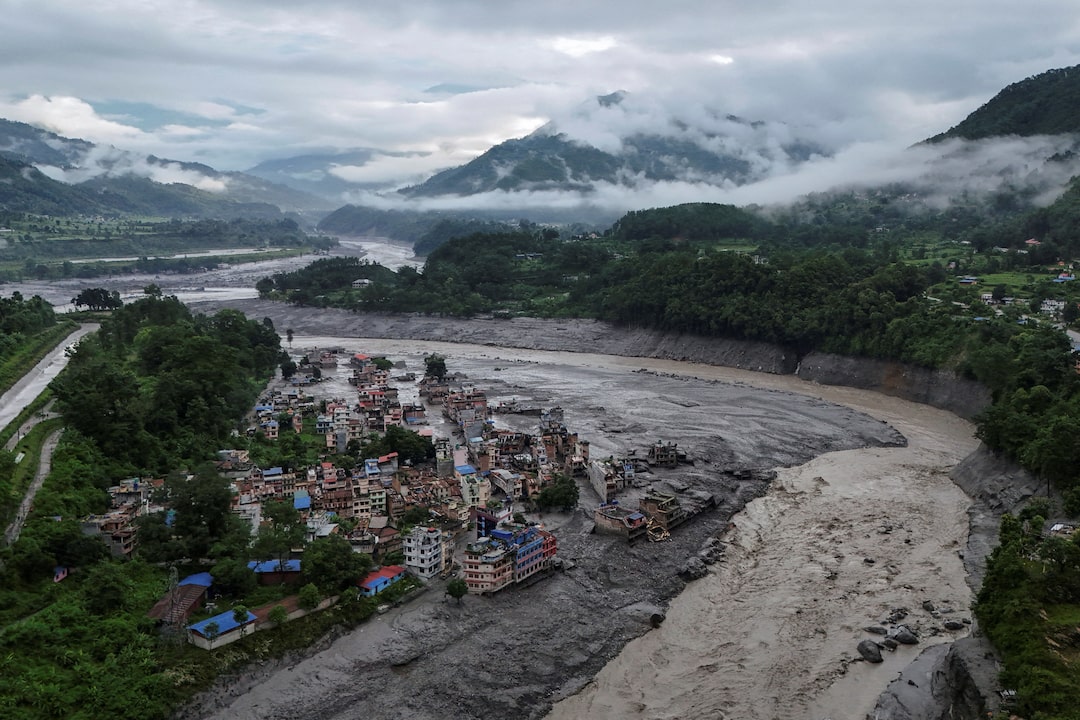
On 26 August 2026, a collapse of rock and glacier ice unleashed devastating floods in Nepal. Rising temperatures melt ice and thaw frozen ground, weakening mountain slopes and increasing the risk of such disasters.

Nepal contributed only about 0.01% of historical global CO₂ emissions, yet its communities face catastrophic losses. This is the case for climate debt: countries most responsible for warming should help pay for recovery, compensate affected communities, and fund protection against future disasters.

Last verified 20 Sep 2026. Reported figures may be revised; each links to its dated source.
Aerial view of flooding and damaged buildings in a Himalayan valley in Nepal01
“A stark example of climate injustice.”
United Nations assessment of the 2026 floodsPhoto: REUTERS/Navesh Chitrakar
Why this is climate injustice

The burden is not
shared equally.

Nepal’s historical contribution to global CO₂ emissions is extremely small. Its communities nevertheless face severe losses from floods and other climate-related hazards.

Emergency relief is only the beginning. Recovery also means rebuilding homes and public services, supporting displaced families, and preparing communities for future risks.

Read the United Nations report
People and places

Nepal is paying for a crisis it barely caused.

Direct support

Ways to help

If you choose to donate, use the organizations’ official websites below. Each link opens the organization’s own donation or emergency-response page.

Government relief

Government of Nepal

The official relief fund supports disaster response and recovery in affected communities.

Prime Minister’s Disaster Relief Fund
Emergency response

Nepal Red Cross

Red Cross teams provide emergency relief, first aid, clean water, and essential supplies.

Red Cross & Red Crescent
unicefChildren and families

UNICEF Nepal

UNICEF supports children and families with safe water, healthcare, nutrition, and protection.

United Nations Children’s Fund
Practical help in Nepal

Offer other help

If you are in Nepal and can help in another way, use the government portal to offer supplies, transport, shelter, skills, or other practical support.

Rasuwa Flood Rescue Portal

Every link opens an organization’s official website. This site does not collect funds or assistance.

Sources & transparency

Facts with context.

These are dated reports, not a real-time casualty count. Estimates can change as assessments continue.

Reported deaths / remains · 1,411 · 19 Sep 2026
Official recovery tally includes 526 entries for human remains; it is not a count of individually identified victims. NDRRMA / Ministry of Finance

People reported missing · 5,875 · 19 Sep 2026
May overlap with unidentified remains, rescued people or duplicate entries. Do not add this figure to the death tally. NDRRMA / Ministry of Finance

Injured treated by security teams · 10,041 · 19 Sep 2026
Security-agency treatment figure. Separately, 18 people were in hospital. The latest report does not provide a complete cumulative injury total; these categories are not added together. NDRRMA / Ministry of Finance

People rescued · 13,784 · 19 Sep 2026
Reported rescues; this is not a count of people currently displaced. NDRRMA / Ministry of Finance

Private buildings damaged · 7,570 · 13 Sep 2026
Government RDNA, summarized by Nepal Red Cross on 13 September. Counts damaged private buildings, not only destroyed homes. Replaces the earlier approximate housing figure; definitions differ. Nepal Red Cross / RDNA

Estimated physical damage · $1.80B · 11 Sep 2026
Rounded government estimate of physical damage, separate from economic losses and reconstruction needs. A fuller post-disaster assessment is still pending. Government of Nepal / MoFA

Estimated economic losses · $883M · 11 Sep 2026
Rounded RDNA loss estimate. This is separate from damage to physical assets. Government of Nepal / MoFA

Recovery & reconstruction · $4.78B · 11 Sep 2026
Rounded government estimate of reconstruction requirements. It is not an additional damage amount and must not be added to damage and losses. Government of Nepal / MoFA

Flood trigger · 9 September 2026
Associated Press reports that a high-altitude collapse of bedrock and glacier ice sent debris and water downstream. Rising temperatures melt stabilizing ice and thaw frozen ground, making steep mountain slopes less stable and destructive collapses more likely. Associated Press explanation ↗

Economic scale comparison
The estimated physical damage is approximately 4.0% of Nepal’s 2025 GDP. This compares monetary values; it does not mean that share of the economy was destroyed. World Bank GDP data

Population · 2025
29,618,118 ÷ 8,215,424,893 × 100 ≈ 0.36%. World Bank population estimates ↗

Historical CO₂ emissions · through 2024
0.01% is Nepal’s share of cumulative global CO₂ since 1751, not its annual share or all greenhouse gases. Our World in Data ↗

Carousel comparisons · 2024 data
Country figures cover territorial CO₂ from fossil fuels and industry, excluding land-use change. Per-person figures are national averages, not measurements of the people pictured. The comparisons below are calculated from rounded published values.

United States and Germany compared with Nepal
Nepal: 0.63 tonnes per person per year. United States: 14.2 tonnes; 366 × 0.63 ÷ 14.2 ≈ 16 days. Germany: 6.77 tonnes; 6.77 ÷ 0.63 ≈ 11 people in Nepal.
Our World in Data · per-person CO₂, 2024 ↗

China’s annual rate and Nepal’s historical total
China emitted about 12.3 billion tonnes in 2024. Nepal’s cumulative total through 2024 was about 232 million tonnes. At that average rate, China emits the same amount in 366 × 232 million ÷ 12.3 billion ≈ 6.9 days.
Our World in Data · China ↗ · Our World in Data · Nepal ↗

A typical U.S. petrol car and Nepal’s national average
EPA estimates 4.6 tonnes of tailpipe CO₂ per year, assuming 11,500 miles driven at 22.2 miles per U.S. gallon. Dividing by Nepal’s 2024 average of 0.63 tonnes per person gives about 7.3 people. This compares one vehicle’s tailpipe emissions with average national emissions per person; actual driving and individual emissions vary.
EPA · vehicle estimate ↗ · Our World in Data · Nepal ↗

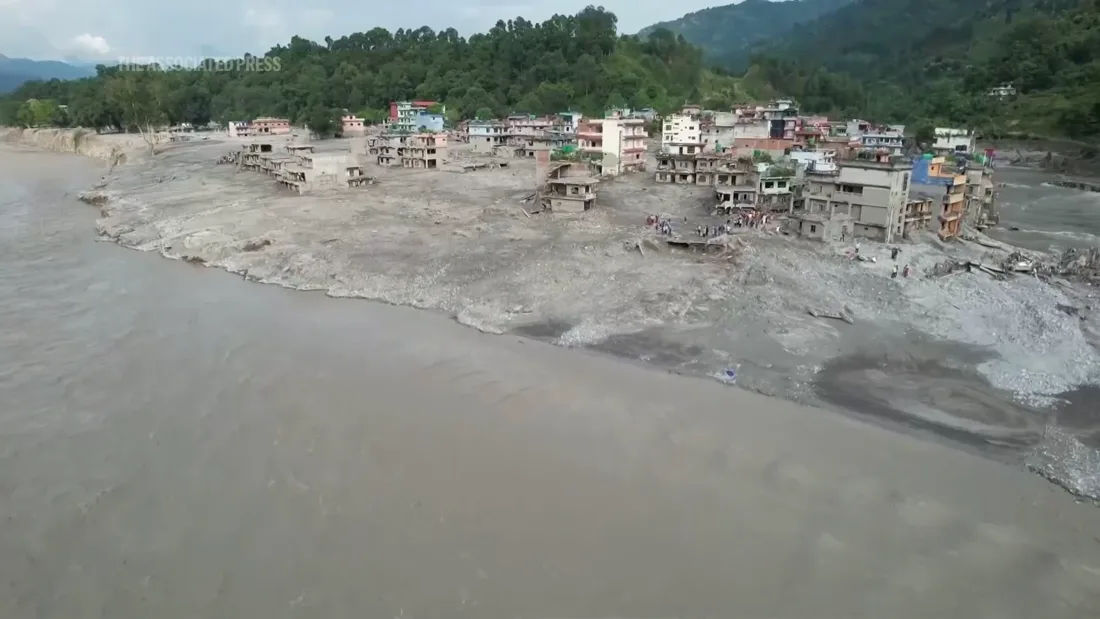
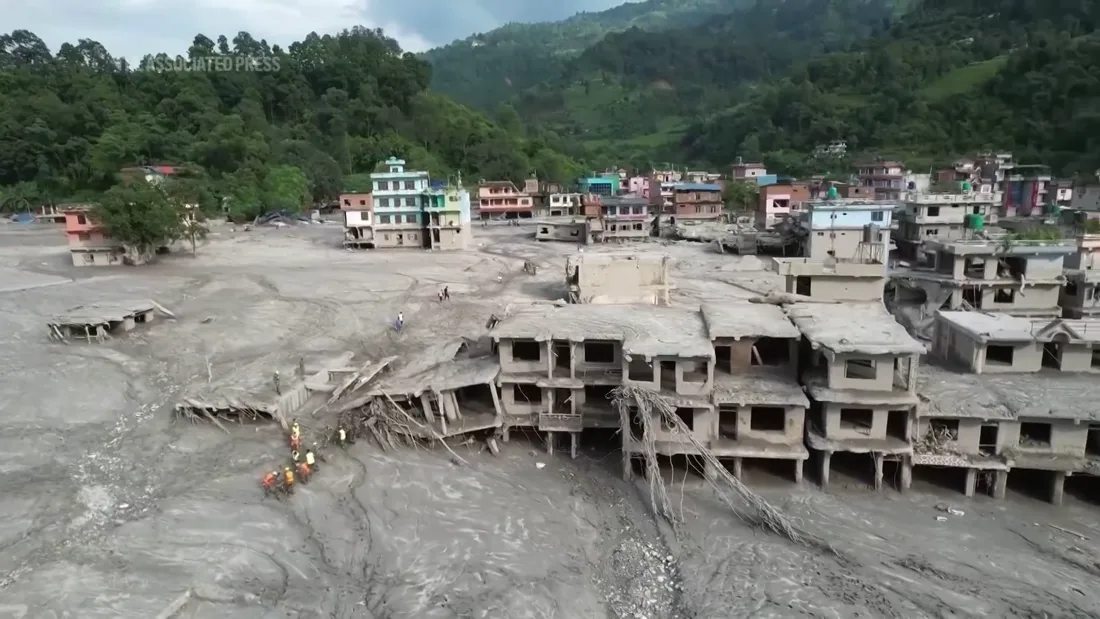
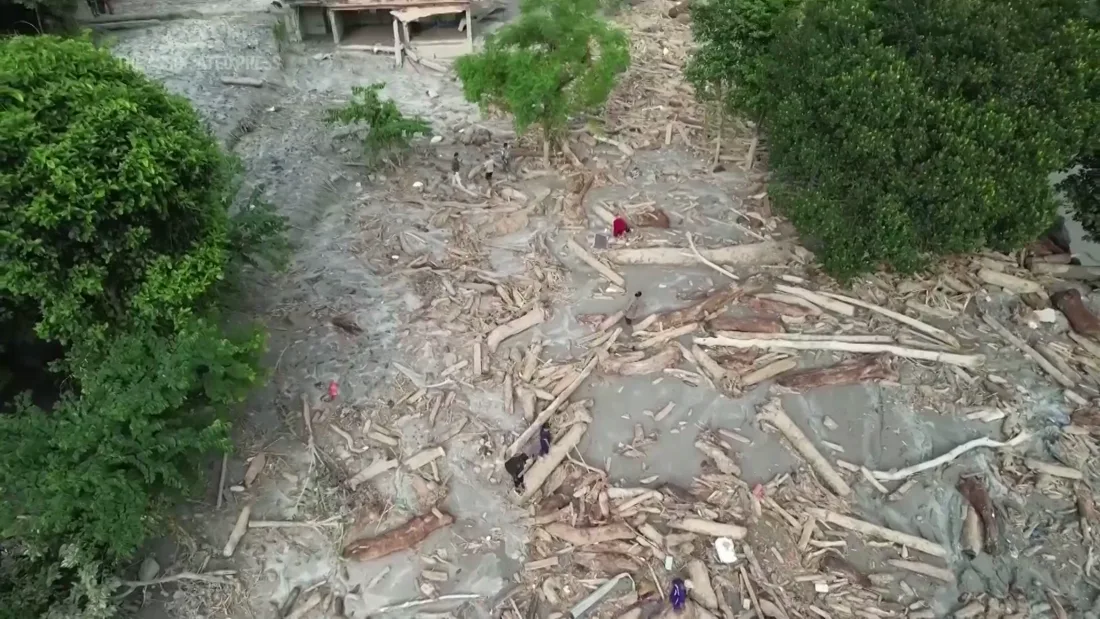
Photo credits and context appear below each carousel image. Background footage: Associated Press, from the supplied video. The supplied video does not establish a recording date. This independent site is not affiliated with the organizations linked here.

Share the information

Share this page

Nepal has contributed just 0.01% of historical global CO₂ emissions. Learn what happened in the August 2026 floods and find direct links to official relief organizations.

Facebook ↗LinkedIn ↗Email ↗